
Behind the luxury and manicured lawns of JW Marriott Khao Lak lies a vital marine conservation effort. The resort’s bamboo shark nursery, managed in partnership with Oceans For All Foundation, serves as a bridge between tourism and marine protection. Here, fragile hatchlings are given the time and care they need to grow strong before returning to the Andaman Sea.
Khun Ying oversees this operation every single day. In this interview, she explains what it takes to rear bamboo sharks through their most vulnerable months, why these apex predators are essential to reef health, and how a brief encounter at the tanks can change a visitor’s perspective forever.
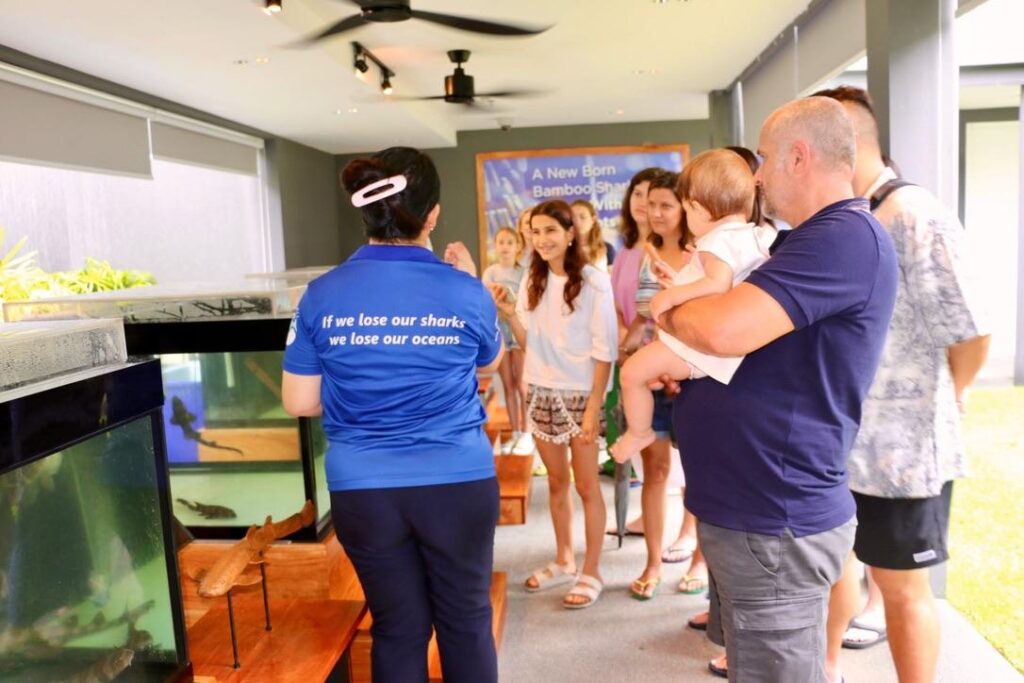
What does a typical day look like for you at the shark nursery?
Every day is different, and there is never a dull moment. Our main goals are to care for the bamboo sharks until they are ready to return to the sea and to help visitors from around the world understand why sharks matter.
Each day, I check the water quality in every tank, prepare food and feed the sharks, and remove any leftover food to keep the tanks clean. I also speak with guests about why we have a shark nursery in Khao Lak and the role sharks play in marine ecosystems.
Why are bamboo sharks important for our local reefs?
Bamboo sharks feed on small fish, shrimp and other invertebrates. As predators, they are part of the balance of life on the reef. They may also feed on sick animals, which is another way they contribute to the ecosystem.
When I speak with visitors, I want them to see bamboo sharks as part of a living reef, where every species has a role.
Many people are afraid of sharks. What do you tell visitors?
I tell them that the sharks they see in films do not represent all sharks. There are more than 500 species, and bamboo sharks are small, gentle animals that pose no threat to humans.
Sharks living around reefs are usually focused on finding food and avoiding danger, not on people. I also explain that fishing nets can threaten them. Once visitors meet the bamboo sharks and learn about them, they often begin to see sharks differently.
How do you know when a baby shark is ready to be released?
We look at its growth and behaviour. Releasing a shark too early could reduce its chances of surviving, so we care for the young sharks for around six months after they hatch.
During that time, we sometimes offer them live shrimp or small fish so they can practise hunting. When they are large enough and hunting well, they are ready to return to the sea.
What is the most challenging part of caring for the baby sharks?
The first three months after hatching are the most delicate. Feeding the sharks and cleaning their tanks may look simple, but we have to watch them closely and respond quickly if one seems unwell.
Water quality and temperature can change, especially with heavy rain or excessive heat. We also need visitors to be considerate and avoid tapping on the glass. Caring for the sharks means paying attention to all these details, every day.
Is there a release that you remember especially fondly?
I remember releasing sharks with a couple who had returned to the hotel to celebrate their second wedding anniversary. The woman was also two months pregnant. They were so happy to share that moment together, and their joy has stayed with me.
Conserving marine ecosystems requires both hands-on scientific work and public engagement. When we give visitors a chance to see bamboo sharks up close, the nursery turns fear into curiosity and builds a deeper appreciation for the sea.
Learn more about the Shark Nursery here: https://tinyurl.com/2f94h4yz
Learn more about our projects here: https://tinyurl.com/yc4u9yyw
Make a contribution here: https://tinyurl.com/2vz78yvh