When we think of forests, our minds often turn to towering trees on land. Yet one of the world’s most important forests grows right where land meets sea: the mangroves. These salt-tolerant trees form dense, tangled root systems that thrive along tropical and subtropical coastlines. While they may not always make the headlines, mangroves are nothing short of climate and biodiversity powerhouses.
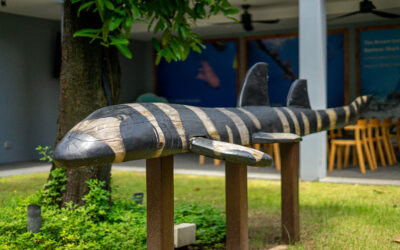
Mangroves provide vital habitat for countless marine species. Juvenile fish, crabs, and even baby sharks find shelter among their roots, safe from predators until they’re strong enough to venture into open waters. This nursery function is critical to global fisheries and the millions of people who depend on seafood for food and livelihoods. According to the UN Food and Agriculture Organization (FAO), mangrove ecosystems support more than 3,000 species of fish worldwide, highlighting just how essential they are for marine biodiversity (FAO, 2020).
Mangrove’s importance stretches well beyond marine life; they act as natural climate regulators, storing up to four times more carbon than most tropical rainforests. Their roots lock carbon into the soil for centuries, making them one of the most effective natural solutions to climate change. The United Nations Department of Economic and Social Affairs (UNDESA) notes that protecting and restoring mangroves is not only a biodiversity measure but also a climate strategy that safeguards communities against rising seas and extreme weather events (UNDESA, 2021).
Mangroves also serve as natural barriers. Their thick root systems absorb wave energy, reducing coastal erosion and protecting shorelines from storm surges. This role has become even more critical as coastal populations grow and climate-related disasters increase in frequency. UNEP emphasizes that mangroves can reduce the height and energy of waves by up to 66%, providing a first line of defense for vulnerable communities living along coasts (UNEP, 2022).
Loss of mangrove cover isn’t just a local issue, it has global consequences. When these forests vanish, coastal communities lose protection from storms, marine populations lose nursery habitat, carbon is released into the air, and the balance of connected ecosystems suffers.
For the everyday person, mangroves may seem like just another cluster of trees by the sea, but in reality, they are working tirelessly for all of us. They’re keeping our air cleaner, our oceans healthier, and our coastlines safer, all while providing a home for extraordinary marine life. Every time we protect a mangrove forest, we are investing in food security, climate resilience, and biodiversity.
As oceans face mounting pressures from plastic pollution, overfishing, and rising temperatures, mangroves remind us of nature’s ability to heal and sustain. The more we recognize their value, the better chance we have of passing on a thriving ocean and planet to future generations.
What Can You Do?
Mangroves may feel far away from our daily life, but each of us can play a part in protecting them:
- Support or volunteer with local mangrove restoration efforts—whether it’s planting, helping a nursery, or joining a cleanup.
- Reduce your impact by cutting down on plastic use, using fertilizers responsibly, and disposing of waste properly to keep waterways clean.
- Advocate for change. Call for policies that protect coasts, prioritize responsible development, and weave mangrove conservation into city planning.
- Share their story. Talk about mangroves at school, in your community, and on social media. Awareness is one of the strongest tools for conservation.
If you’re looking for a way to make an impact in your daily routine, consider joining the Oceans For All BluePass program. By becoming a BluePass member, you offset your carbon footprint and directly support projects like mangrove restoration, shark nurseries, and coastal cleanups. It’s a simple way to connect your everyday choices with a healthier ocean.
References
- United Nations Environment Programme (UNEP). Mangrove Forests. Retrieved from: https://www.unep.org/topics/ocean-seas-and-coasts/blue-ecosystems/mangrove-forests
- United Nations Department of Economic and Social Affairs (UNDESA). One Million Mangroves. Retrieved from: https://sdgs.un.org/partnerships/one-million-mangroves
Food and Agriculture Organization of the United Nations (FAO). The World’s Mangroves 2000–2020. Retrieved from: https://openknowledge.fao.org/server/api/core/bitstreams/7f15adf1-2756-4e86-a6dd-77d0fc26d97c/content